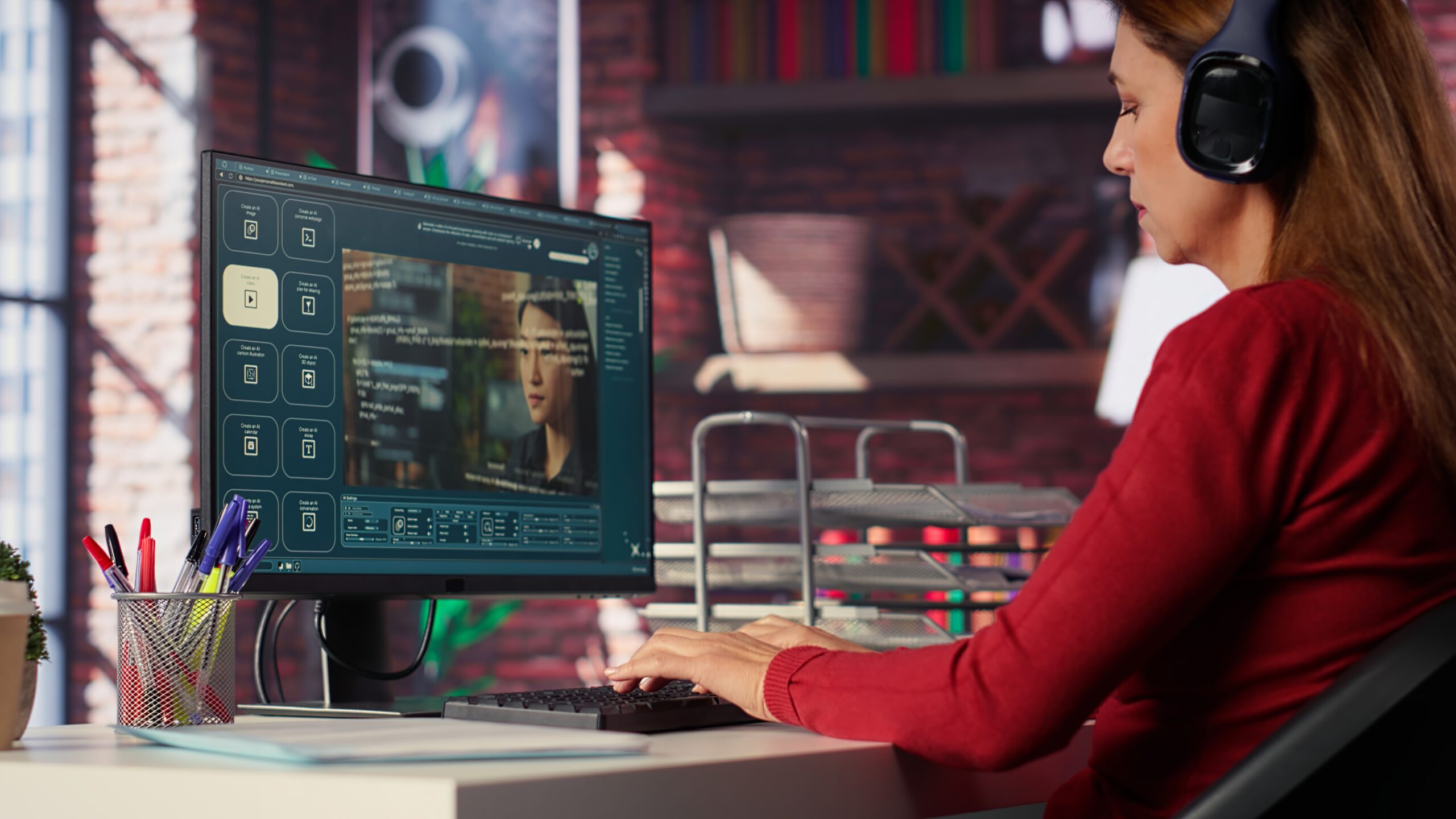

Scenario is an AI-driven creative platform that aims to enable users to create, edit, and organize visual resources, such as images, videos, and 3D content, in a single platform.
Fundamentally, Scenario enables users to train custom AI models using their own style of art or using reference material and generate content (including characters, environments, textures, animations, and 3D meshes) that is consistent with that style.
In addition to generation, the platform has incorporated editing, upscaling, asset management, and workflow tools and is designed to support the entire creative pipeline, from concept to production-ready output.
Scenario is also being marketed to hobbyists as well as game developers, creative studios, marketing teams, and designers who require mass production of visual content with the same level of style.
Strengths and Key Features: What Scenario Does Well
The uniformity of style through personal model training is one of the strongest selling points of Scenario. The platform trains a model by feeding it with a set of reference images, such that all future outputs would correspond to that style. Users are able to create dozens or even hundreds of game characters, environment assets, UI elements, or art assets that are a match, which is much more cost- and time-saving than manually created content.
Scenario allows supporting various types of media: static images, video generation, and making 3D assets. Individual users can generate animated clips, create 3D meshes complete with textures that can be used in games or VR/AR, and create environmental art like a texture or a skybox. This is flexibility, and it is difficult to find in the AI-asset tools.
Besides generation, Scenario has powerful editing and refining options, including in-painting and out-painting images, prompt-based edits, upscaling, and restyling. In the case of video content, it offers editing, reframing, and upscaling of the content and enables users to refine AI-generated material to a production standard.
Scenario offers team and asset management capabilities (workflow) in terms of workspace folders, asset libraries, tagging, search, and role-based access. This is why it applies both to individual creators and medium-to-large teams.
Lastly, Scenario provides speed, scalability at a lower cost. Users can refine and experiment with alternatives faster than it would take days or weeks to develop concept art, 3D renderings, or animation due to the ability to rapidly make iterations, explore alternatives, and acquire a wide range of assets in a fraction of the time. It is of particular benefit to a small team or a single developer on a bigger project.
Where the scenario is Weak, Limitations, Tradeoffs, and Things to Note
Scenario is not a silver bullet despite its merits. Since it is based on AI-generated content, there exist boundaries to originality and creativity. Outputs can be formulaic, derivative, or not as human a market as a human artist can offer, especially in the telling of stories, emotion, or delicate design information.
The iteration is still done in order to get perfect style consistency across multiple asset types, even with custom model training. To be able to match the complex characters with the environment, props, and UI expressed within the same art world, it is frequently necessary to tune carefully, do prompt engineering, and do manual clean-up.
In high-fidelity, large-scale generation, like AAA games, cinematic films, or industrial design, AI generation may not be refined or detailed enough to be integrated into a production pipeline. 3D meshes or textures can still require some sort of manual refinement, retopology, or texture baking before being ingested into a pipeline. Scenario hastens the development; however, it does not completely override human-based polishing.
There is also a compute and cost trade-off. When Scenario abstracts infrastructure and GPU load, any high-quality or high-resolution output, particularly in video or 3D, would run expensive in terms of resources or credits. Depending on the necessity, this expense can compound and compete with conventional workflows in the case of very large projects.
Lastly, there are still overall issues with AI-generated art: originality, intellectual property rights, ethics, and creative property. In commercial use, outputs should be thoroughly checked to prevent violation of third-party IP. To make sure that the work is legal and ethical, this requires human control.
Best Cases: Which Scenario is Best For Ideal Cases
Scenario works well with small- to mid-size studios, indie game developers, creative agencies, marketing teams, or solo creators who require a large number of assets to be generated in a very short period and of consistent quality. Its capabilities are highly beneficial in projects where the deadline is very short, there is a very constrained budget, or there is a need to be able to develop a prototype in a comparatively brief period of time.
It is also especially appropriate in projects where the style consistency, rapid development, and breadth are more important than polish, e.g., mobile games, indie games, marketing art, social media art, concept art, or early-stage prototypes.
Scenario is also best suited to creators who are trying a new style of art, creating a minimum viable product (MVP), or developing creative concepts without investing masses of resources. Users are able to test, retest, and refine within a short time, breaking the overhead of full manual pipelines.
Scenario can democratize the creation of assets on teams that have mixed skill levels—artist and non-artist teams. Other non-artists may provide references and prompts, and artists will oversee and refine the final products, hence making the process of collaboration more productive.
Verdict Scenario Is Powerful, But Not a Replacement of Artists
Scenario is one of the largest AI-asset platforms in existence, with style-supported generation, multimedia support, editing, and workflow management all in one platform. To numerous creators, this is a huge leap compared to manual creation or purchase of generic assets.
But a scenario is not a substitute for human art. Its power consists in its ability to create bulk assets and facilitate rapid prototyping, making small teams go big, yet more sophisticated outputs, art direction quality, and creative accents, nonetheless, still need human input.
In case of indie games, marketing campaigns, prototypes, or time-consuming projects, a low-budget scenario can be selected. When needed, scenario outputs serve as raw materials, which require advanced refinement and polishing by human resources in the case of large-scale, high-fidelity work.
To conclude, Scenario is an effective creative tool in the arsenal, provided that people know its boundaries and apply it properly.